
Central American agouti
Dasyprocta punctata
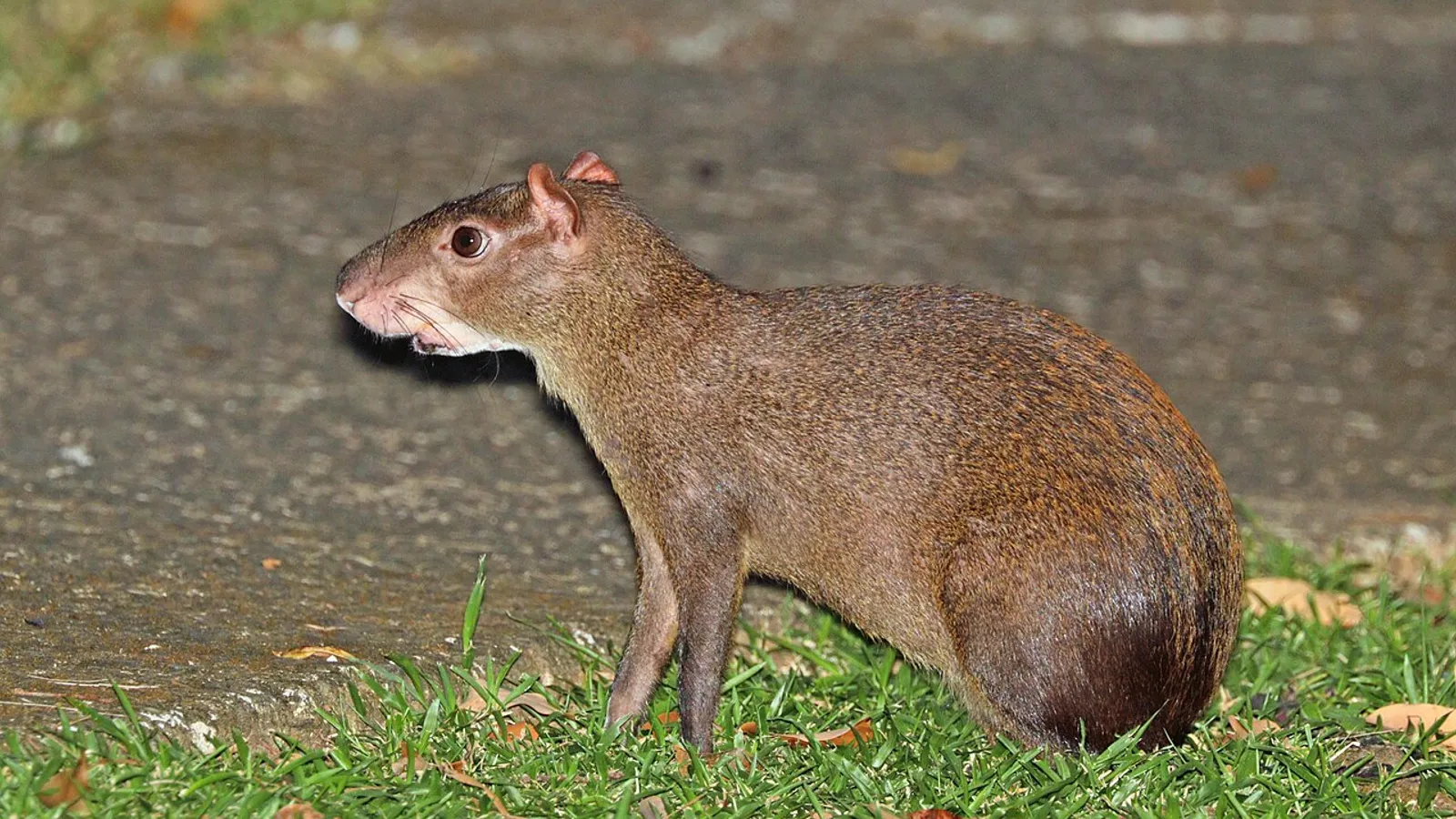
— Where the name comes from
Dasyprocta means literally “hairy rump”, from dasýs, thick, and prōktós: the long stiff hairs of the back, which the animal raises when alarmed. Punctata, “spotted”, describes the speckling of the coat. Agouti, by contrast, comes from the Tupi akutí, one of the many Amazonian names to have passed into the European languages.
— Facts
- Group
- Mammals · Mammalia
- Order
- Rodents
- Habitat
- Rainforest, secondary forest, plantations
- Range
- From southern Mexico to Ecuador and northern Bolivia
- Size
- 40–60 cm, tail a very few centimetres, 3–6 kg
- Diet
- Seeds, fallen fruit, fungi, leaves
- Lifespan
- 17 years in captivity
— Characteristics
- 01
It walks on tiptoe, with nails resembling small hooves.
- 02
It buries seeds one at a time in hundreds of separate caches.
- 03
It follows monkeys feeding overhead to gather what they drop.
— What sets it apart
It is the only animal that opens the fruit of the Brazil nut, and without it that tree would not reproduce. The woody capsule holding the seeds is too hard for any other tooth in the forest; the agouti gnaws it open, eats some seeds and buries many more, forgetting enough of them to raise new trees. Camera traps have shown the rest of the story too: the seeds are continually stolen and reburied by other agoutis, and through sheer theft they end up hundreds of metres from the mother tree.
